Why the ByWard Market Matters: Ottawa’s Historic Heart
There’s something about walking through the ByWard Market that feels different from other tourist districts. Maybe it’s the cobblestone streets. Maybe it’s the 200-year-old buildings still standing alongside modern restaurants. Or maybe it’s the fact that this place isn’t just near Ottawa’s history—it literally is Ottawa’s history.
This is where the city began.
The Birthplace of Ottawa
Before Ottawa was Ottawa, it was Bytown. And before Bytown existed at all, this area was a dense cedar bog.
In 1827, Lieutenant-Colonel John By arrived with a mission: build the Rideau Canal to create a secure military supply route between Montreal and Kingston. He needed workers. And those workers needed somewhere to live, eat, and trade.
So Colonel By drained the swamp and established a public market—a commercial district separate from the military operations happening in Upper Town (where Parliament Hill sits today). He called it Lower Town. The market took his name: the ByWard Market.
It’s been in continuous operation ever since. Nearly 200 years of farmers, merchants, artisans, and food vendors—all in the same few blocks.
The current market building, designed in 1927-1928 by architects Richards and Abra, is actually the fifth structure on this site. The previous one burned down in 1926. A bell from the original market still hangs in the building today, and it’s rung every morning to mark the opening of business. Locals and visitors can ring it themselves.
More Than a Market
What strikes me most about the ByWard Market is how many layers of history exist in one place.
This neighborhood has been home to wave after wave of immigrants building new lives in Canada. At different points, it served as the cultural center for Irish Canadians, French Canadians, and Jewish communities—each group establishing schools, churches, meeting halls, and businesses here. The architecture reflects this: Second Empire buildings with mansard roofs stand next to Italianate commercial buildings, early Art Deco storefronts, and Victorian-era homes.
It’s not a museum. It’s a living neighborhood where the buildings evolved alongside the people who used them.
The ByWard Market was designated a Heritage Conservation District in 1991, protecting 50 acres and over 160 buildings. And just recently, the city approved a nomination to make it a National Historic Site in time for its 200th anniversary in 2027.
What to Do in the ByWard Market
History aside, the ByWard Market is also just a really good time.
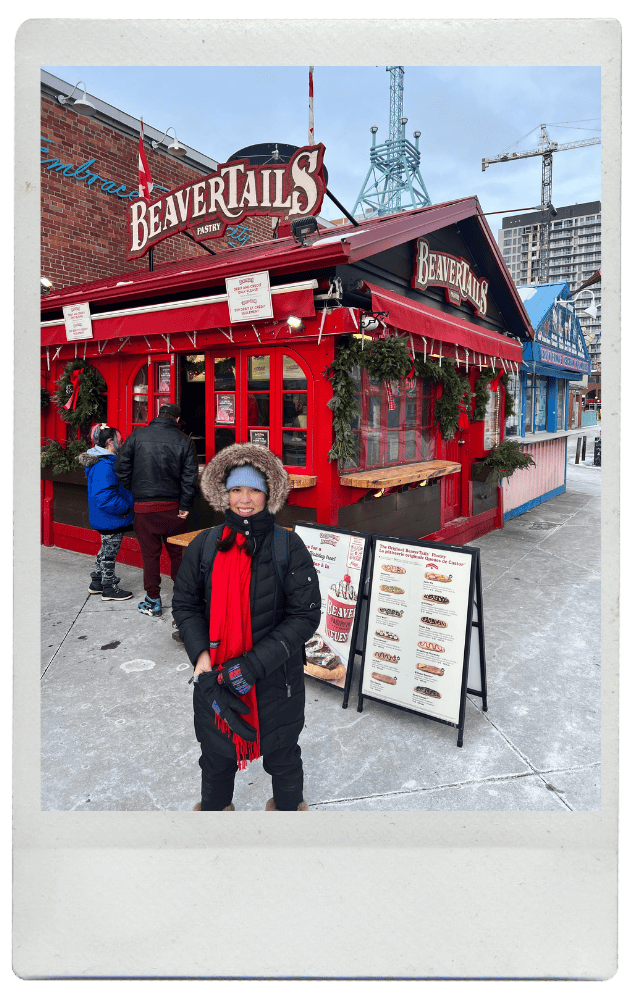
Eat everything. This is where BeaverTails were born—those flat, fried dough pastries covered in cinnamon sugar, Nutella, or whatever your heart desires. The original stand is still here. Grab one, then wander over to Le Moulin de Provence for a pastry (President Obama famously stopped here for a cookie). For something more substantial, Play Food & Wine does incredible small plates, and Zak’s Diner serves classic comfort food with retro flair.
Explore the vendors. The outdoor farmers’ market runs from May through October, but the indoor market operates year-round. You’ll find local produce, maple products, cheese, flowers, and artisan goods. In winter, the ByWard Winter Market transforms the area with holiday vendors and lights.
Wander the courtyards. Five cobblestone courtyards stretch along Sussex Drive, filled with sculptures, fountains, and benches. Several heritage buildings surround them—it’s one of the prettiest corners of the market.
Stay for the nightlife. The ByWard Market has the highest concentration of restaurants, bars, and clubs in the entire National Capital Region. The Chateau Lafayette (locals call it “the Laff”) has been pouring drinks for over 170 years—Ottawa’s original dive bar.
Visiting the ByWard Market
Location: Downtown Ottawa, bordered by Sussex Drive to the west, Rideau Street to the south, and stretching north toward St. Patrick Street.
Getting there: It’s walking distance from Parliament Hill, the Rideau Canal, and most downtown hotels. The Rideau O-Train station is nearby, and paid parking is available in the Market’s parking garage.
Hours: The indoor market is open daily, year-round. Outdoor vendors operate May through October (and during the winter market season from November to early January).
Best time to visit: Weekend mornings for the farmers’ market vibe. Evenings for dining and nightlife. Winter for a completely different (but equally charming) experience—especially during the holiday season or Winterlude in February.
Why It Matters
I’ve visited a lot of markets in a lot of cities. Most of them feel like tourist traps dressed up in “local” clothing.
The ByWard Market doesn’t feel that way. Maybe because it predates tourism entirely. Maybe because people still actually live here, shop here, and treat it like their neighborhood—because it is.
When you walk through the ByWard Market, you’re walking through the same streets that canal workers walked in 1827. You’re shopping in the same market where farmers have sold produce for nearly two centuries. You’re eating BeaverTails at the stand where BeaverTails were invented.
It’s Ottawa’s oldest commercial district, its busiest gathering place, and—if the National Historic Site nomination goes through—soon to be officially recognized as a place of national significance.
For me, that’s what makes it worth more than a quick photo stop. It’s worth slowing down for.
More Ottawa Guides:
- [15 Best Things to Do in Ottawa in Winter]
- [How to Dress for Canadian Winter: A First-Timer’s Guide]
- [How to Keep Your Feet Warm in Winter]
Have you been to the ByWard Market? What was your favorite spot? Find me on [TikTok] or [Instagram] — I’d love to hear about it.