Montreal in Winter: Where Old World Romance Meets Modern Magic
Why this might just be the most enchanting city in North America
The Crossing
There’s a moment—somewhere between Ontario and Quebec—when the air subtly changes.
Not in a dramatic, cinematic way. Nothing announces it. But suddenly, the bilingual signs disappear. English steps aside. French takes over completely. Road signs, gas pumps, convenience store aisles—everything shifts language at once, and with it, rhythm.
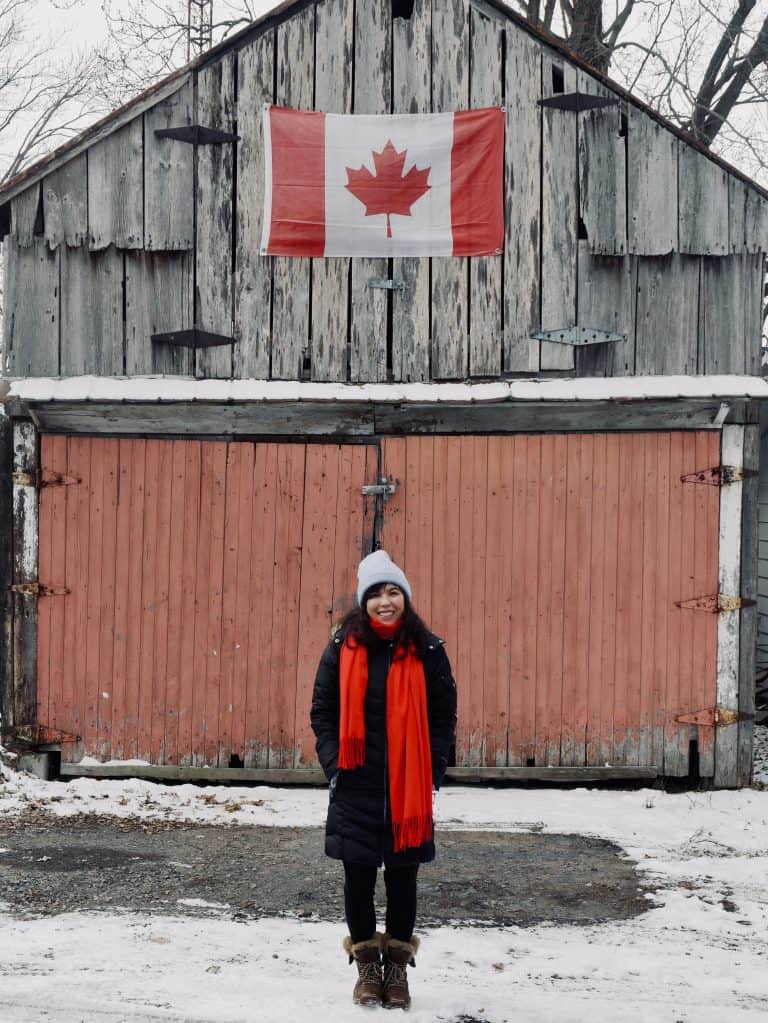
You pull off the highway to fill up the tank or grab a snack, and it becomes clear you’re no longer easing into a culture—you’re inside it. In the small towns along the way, English isn’t assumed. It isn’t offered. Conversations unfold rapidly in French, casual and unselfconscious. You’re not unwelcome, but you are unmistakably elsewhere. You cross the border, and Quebec makes itself known immediately—less like entering a new province and more like stepping into another country.
By the time Montreal appears on the horizon, that sensation has already taken hold.
Day One: First Impressions and Underground Adventures
The Welcome
There’s something about Montreal that defies explanation—a kind of enchantment that settles over you the moment you arrive. It’s a big city that somehow feels intimate, like you’ve stumbled into a secret hiding in plain sight. Around every corner, time folds in on itself: French colonial architecture stands shoulder-to-shoulder with Victorian brownstones, while modern glass towers reflect centuries-old church spires in their windows. Past and present don’t just coexist here—they dance together.
We discovered this magic before we even parked the car.
Stopped at a red light, a man in the next lane noticed our Alabama plates. He rolled down his window—in December, in Montreal—and removed his orange-tinted glasses with deliberate slowness, as if to see us more clearly, more truly. In a warm French-Canadian accent that wrapped around each word like a blanket, he welcomed us to his city. Not just welcomed—really welcomed. He marveled that we’d driven all the way from Alabama. He expressed genuine hope that we would fall in love with Montreal the way he had.
Then the light changed, and he was gone.
We sat there wondering if we’d just experienced something ordinary that Montreal had quietly transformed into magical.
That’s Montreal. A city where strangers pause at traffic lights to welcome you home to a place you’ve never been. Where every cobblestone street whispers stories from another era while pulsing with contemporary life. Where winter—that season most cities merely endure—becomes an invitation to gather closer, to seek warmth not just in cafés and underground passages, but in the unexpected kindness of people who understand that harsh winters are best survived together.
This city refuses to choose between grandeur and intimacy, between its French soul and its North American pragmatism, between preserving history and embracing the future. Instead, Montreal holds all of these contradictions in perfect tension, creating something entirely its own.
And in winter, when the snow softens the edges of everything and the lights glow warmer against the cold, Montreal’s magic becomes impossible to deny.
Planning a Budget Weekend
I’d been to Montreal once before—on that same trip, we’d visited Quebec City and I’d fallen deeply in love with the cobblestone roads of Old Montreal. We’d splurged on a hotel in the historic district then, but this time we were on a tighter budget. We left our dog with Adam’s mom back in Ottawa and gave ourselves two full days and one night. Thirty-six hours to pack with as much Montreal magic as possible.
A Word on Parking: Everyone warned us about Montreal parking. The regulations are complex, often contradictory, and entirely in French. Free parking spots sit next to permit-only zones with no clear distinction. We opted for peace of mind and paid $30 CAD (~$20 USD) for 48 hours in a secured lot in the Plateau neighborhood. Worth every penny.
Mile End & Plateau: Where Local Montreal Lives
We started with Portuguese poutine—very Quebecois, despite the name. I have a fascination with Portuguese culture that deepened after we eloped in the Azores, so this felt like two of my favorite worlds colliding over cheese curds and gravy.
Mile End and Plateau offer a completely different energy than downtown or Old Montreal. If you want to experience where Montrealers actually live, eat, and gather, this is it. The neighborhoods apparently come alive in summer, but even in December’s grip, they hummed with life.
We wandered past boutique shops (mental note: budget for shopping next time), colorful murals, and corner cafés. Then we heard him: a man with a walking stick, a dog trailing behind, singing opera into the cold air. No amplification. No audience expected. Just pure, impromptu beauty offered freely to whoever happened to pass. My jaw dropped. I followed him for half a block just to hear more of this unexpected street concert.
That’s the romance of Montreal—art and beauty aren’t saved for venues and stages. They spill into the streets.
Staying Hydrated in Winter
Here’s something no one tells you about Canadian winter: you get dehydrated fast. All those layers, all that walking, you’re sweating more than you realize. But without the sun beating down, your body doesn’t trigger thirst the same way. At Rachelle-Béry—a Quebec-based grocery chain—I grabbed water and discovered something called birch water.
Birch Water is exactly what it sounds like: sap tapped from birch trees in early spring, slightly sweet with a clean, mineral taste. It’s been consumed in Northern and Eastern Europe for centuries and is naturally rich in electrolytes. In Quebec, it’s becoming a trendy alternative to coconut water. I loved it—refreshing without being overly sweet.
Café Olympico: An Institution
We grabbed espressos at Café Olympico, a Mile End institution since 1970. This isn’t some hipster third-wave coffee shop—it’s an old-school Italian espresso bar that’s been serving the neighborhood for over 50 years. The kind of place where regulars read newspapers, conversations happen in three languages, and the espresso is strong enough to keep you warm for blocks. Leonard Cohen used to frequent this café. That’s the kind of legacy we’re talking about.
We wanted to try St-Viateur Bagel (one of Montreal’s two legendary bagel bakeries), but they only accepted cash. We weren’t about to get Canadian currency exchanged—we’ve been carrying Malaysian ringgit in our wallets for months with the same intention. Note to self: Ottawa is apparently excellent for currency exchange since it’s the capital and has numerous embassy services.
Winter Survival Tip #1: Layers Are Both Savior and Enemy
Everyone told me: layers, layers, layers. I may have taken it too far.
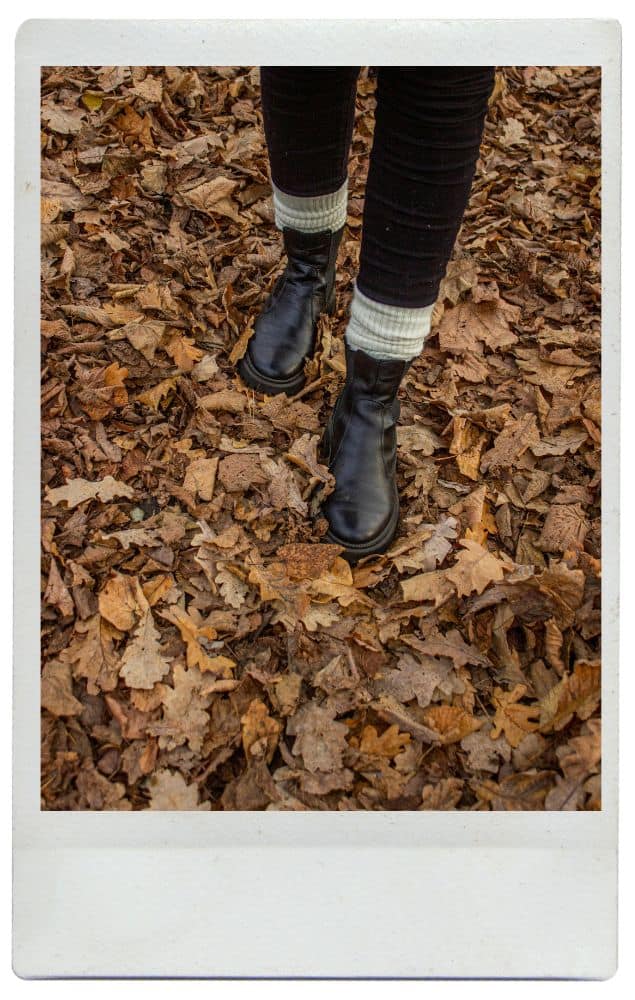
By the time we Ubered to our hotel (Hotel Arcadia in Old Montreal—cheaper than dealing with downtown parking) and started exploring on foot, I was drenched in sweat. My core was overheating, which somehow made my feet colder. My toes cramped inside my winter boots. It was miserable.
The lesson: You can check out my detailed guide on How to Dress for Canadian Winter: A First-Timer’s Guide, but here’s the short version—you need to be able to shed layers. When you’re walking through heated underground passages, riding the metro, or ducking into shops, that heavy coat becomes a furnace. Dress in removable layers, not one mega-parka.
Old Montreal After Dark
LUMINO & the Christmas Market
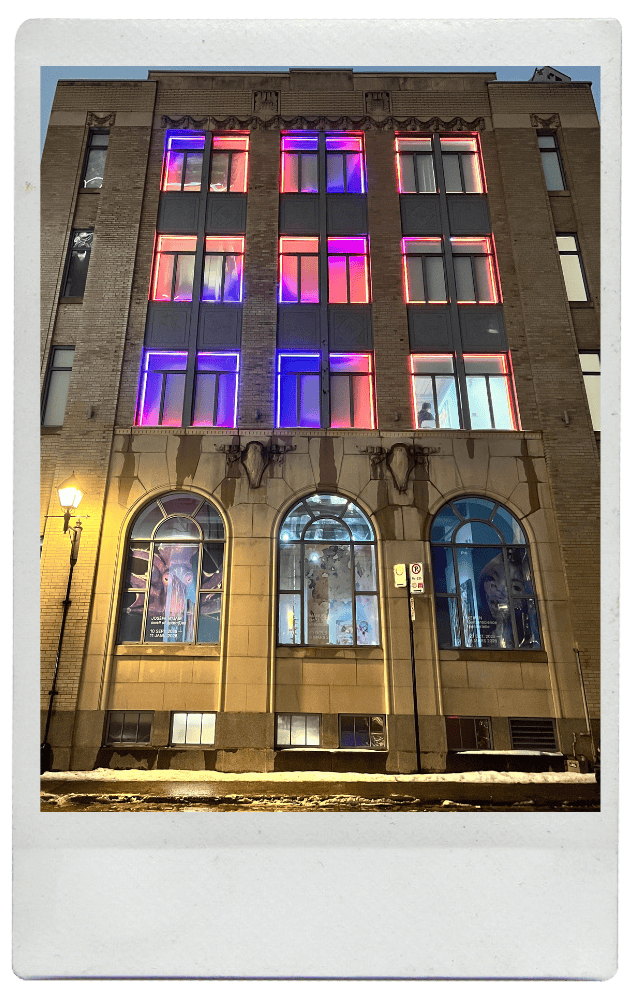
We wandered through LUMINO, Montreal’s winter light festival that transforms the Quartier des Spectacles into an illuminated wonderland from November through March. Over 30 interactive light installations turn the downtown core into an outdoor art gallery—and it’s completely free.
The Great Christmas Market at Place des Festivals exceeded even Ottawa’s impressive market. I tried maple liqueur, which was dangerously delicious—the kind of thing you could drink an entire bottle of in five minutes if you weren’t careful. The food stalls offered cheese fondue served in baguettes, crepes, tourtière, and countless French delicacies I’d never encountered. The wooden chalets glowed with string lights, and steam rose from mulled wine and hot chocolate stands.
This is what Montreal does best: it takes winter—dark, cold, inhospitable winter—and makes it feel like a celebration.
SAT (Société des Arts Technologiques): Where Art Meets Technology
Our main destination was SAT, a multidisciplinary center dedicated to immersive art, virtual reality, and experimental digital culture. Think planetarium meets art gallery meets avant-garde performance space. It’s been pushing the boundaries of digital art in Montreal since 1996, showcasing everything from immersive dome projections to VR experiences to experimental sound performances.
I’d somehow misread our ticket time, but the receptionist graciously let us into the showing that had just started: This Rented Shell.
I’ll be honest—I was hesitant. Poetry performances can feel inaccessible, pretentious. But this was neither. The piece explored themes of embodiment, transience, and what it means to temporarily inhabit these bodies we’re given. Each line landed with philosophical weight: profound enough to make you pause, but the experience moved too quickly to fully process each thought before the next one arrived. The visuals and soundscapes intensified everything—not overwhelming, but deliberately overstimulating in a way that mirrored the existential questions being asked.
I left wishing the artist had published a book. I wanted to sit with those words, reread them, let them settle.
The Underground City (RESO)
After SAT, we dove into the Montreal Metro—surprisingly clean, efficient, and featuring genuinely impressive art installations in many stations. Each stop has its own architectural personality.
For $6.50 CAD (~$5 USD), you can get an unlimited evening pass starting at 6 PM.
From the metro, you can access the RESO, Montreal’s legendary underground city. Over 33 kilometers of climate-controlled passages connect metro stations, shopping centers, hotels, universities, museums, and office buildings. You can spend hours wandering through this labyrinth, shopping, eating, and people-watching without ever stepping outside.
We found a Lindt chocolate store somewhere in RESO—I honestly couldn’t tell you where. The system is genuinely maze-like. It would take weeks to fully map it in your mind, and there’s something thrilling about that.
This is where my layer situation became a crisis. Walking through the heated underground, I was drenched in sweat. My feet, cramped in my winter boots, were simultaneously hot and somehow still cold. Uncomfortable doesn’t begin to describe it. I practically limped back to the surface.
Dinner in Old Montreal: A Mixed Experience
We returned to Old Montreal for dinner at Wolf & Workman, where we’d had an excellent tourtière (meat pie) on our last visit. The pie was still delicious. Everything else was… fine.
But here’s the thing: the restaurant was blasting early 2000s rap and hip-hop at club volume. Sean Paul. Usher. Nelly. Don’t get me wrong—I love those songs. But in a cozy Old Montreal bistro, we had to yell across the table to hear each other. It completely destroyed the ambiance. All I remember now is the meat pie and the jarring soundtrack.
Our hotel was on the same block, thankfully, because my feet were screaming. I fashioned makeshift toe spacers out of toilet paper to relieve the cramping. (Add “toe spacers” to the winter packing list.)
We spent the rest of the evening watching F1 in bed—the new Brad Pitt movie that somehow managed to be 2.5 hours long with zero emotional depth or character development. The dialogue literally explained the plot as if written by AI or designed for multitasking. We hated it. It was at least an hour longer than it needed to be.
Day Two: Slippers, Sewers, and Smoked Meat
The next morning, I walked around Old Montreal in my house slippers.
Let me explain: my feet were still recovering from the previous night’s boot torture. At this point, I’d rather have cold feet than feet in pain. Fashion be damned—comfort won.
Hotel Arcadia graciously held our luggage until 6 PM, so we were free to explore unburdened. We started at Dépanneur Café, a charming spot that doubles as both café and boutique selling local goods. We shared a bagel, I ordered a London Fog, Adam got his espresso. But the real find was the hot sauce collection.
We bought five different bottles of locally-made hot sauce for Christmas gifts, then immediately bought the same five for ourselves. Adam predicted they’d last until spring. I gave them until February. (I’ll update this post with the results.)
The Elusive Perfect Sweater
I wanted a Montreal sweater—something distinctly local but not screaming “TOURIST,” yet not so avant-garde that I’d only wear it once. That sweet spot proved impossible to find in Old Montreal’s shops. I left empty-handed but with higher standards for next time.
Pointe-à-Callière: Layers Upon Layers of History
The Montreal Museum of Archaeology and History (Pointe-à-Callière) sits on the actual birthplace of Montreal—the exact spot where the city was founded in 1642. But the genius of this museum is that it’s built on top of the archaeological remains, letting you walk through actual history.
You descend underground to explore the original settlement’s stone foundations, colonial-era sewers (yes, you walk through 18th-century sewers—they’re remarkably well-preserved), and layers of civilization built one on top of another. The exhibits trace Montreal’s evolution from Indigenous gathering place to French colonial outpost to British territory to modern Quebec metropolis.
The sewer section is particularly fascinating—these underground waterways once flowed beneath the old city, and now you’re walking beside them, reading about daily life in colonial Montreal. It’s intimate and slightly eerie, like stepping into a time capsule that was never meant to be opened.
The museum brilliantly weaves together Indigenous Haudenosaunee history, French colonization, British conquest, and Quebec’s ongoing cultural identity. You emerge with a much deeper understanding of why Montreal feels like a city caught between eras—because it literally is built on top of all of them.
Lunch at Ciccio’s
Ciccio’s in Little Italy delivered exactly what we needed: rustic, unfussy Italian food that tastes like someone’s nonna is in the kitchen. The restaurant has that warm, neighborhood trattoria energy—locals reading newspapers, families sharing platters, the kind of place where the staff remembers your order. We devoured pasta that was perfectly al dente and crusty bread that soaked up every drop of sauce. The kind of meal where you leave full but already planning your next visit.
PHI Centre: When Contemporary Art Makes You Question Everything
PHI Centre is a contemporary art and culture hub spread across three connected buildings in Old Montreal. It showcases immersive installations, virtual reality experiences, experimental film, and multimedia exhibitions that blur the line between art, technology, and philosophy.
We also experienced a sound pod—essentially a personal meditation chamber where you lie back while carefully curated frequencies and ambient sounds wash over you. Deeply relaxing, almost hypnotic.
Here’s my confession about contemporary art: I try to understand it. Really, I do. I’m an artistic person—I create, I appreciate craft and technique. But sometimes I look at contemporary installations and think, “I could make this.” Which is probably missing the point entirely.
Maybe that’s what’s inspiring about it. The execution matters, yes—but so does the audacity to claim space, to build the network, to convince people your vision deserves a gallery. That takes a different kind of artistry. The conceptual courage to say, “This matters,” and make others believe it too.
We left feeling both inspired and slightly confused. Which might be exactly the response contemporary art is going for.
The Pilgrimage to Schwartz’s
We grabbed our luggage from the hotel, Ubered back to our car, and made the pilgrimage every Montreal visitor must make: Schwartz’s Deli.
Schwartz’s Hebrew Delicatessen has been serving Montreal smoked meat since 1928. It’s the oldest deli in Canada, a tiny counter-service institution where the line wraps around the block regardless of weather or time of day. Michelin recommended it. Anthony Bourdain loved it. Montreal treats it like a civic treasure.
The sandwich is deceptively simple: hand-cut smoked meat piled high between light rye bread, yellow mustard, maybe a pickle on the side. That’s it. No fancy aiolis, no artisanal brioche, no deconstructed interpretation. Just decades of perfected brisket-smoking technique—a secret spice blend, ten days of curing, and that distinctive Montreal-style smoke.
We understood the hype instantly. The meat was tender, smoky, peppery, with just enough fat to make each bite melt. The kind of sandwich where you stop talking mid-bite because you need to focus on what’s happening in your mouth.
A Portuguese Interlude
We ducked into a Portuguese snack bar in Little Portugal—nothing fancy, just a TV playing soccer (Cristiano Ronaldo, naturally), and an older Portuguese bartender presiding over a room where everyone spoke only Portuguese.
His English was limited. Adam wasn’t sure how to ask for a digestive drink. Finally, he gestured to his stomach and said we’d just eaten and wanted something to help.
The bartender’s face lit up with understanding. “Ah!” He poured us espressos and shots of amaretto without another word.
This is the universal language of post-meal digestifs—digestivos in Portuguese culture. Amaretto, grappa, aguardente—these aren’t just drinks, they’re medicine, ritual, the proper way to close a meal. The bitter or herbal notes are believed to aid digestion, but really, they’re about slowing down, extending the moment, giving your body time to settle before rushing back into the world.
We sipped slowly, watching soccer highlights we couldn’t understand, surrounded by rapid Portuguese conversation, feeling like we’d stumbled into someone’s living room. It was perfect.
Goodbye, Montreal
One last walk through the neighborhood. Past murals and boutiques, frozen sidewalks and steamed-up café windows. The December sun was already setting—winter days in Montreal are short—and the city was beginning its transformation into its evening self: lights warming, people bundling up, the promise of another night of magic beginning.
Two hours back to Ottawa. Two days in Montreal that somehow felt like two weeks.
This city has a way of expanding time, of making every moment feel fuller, richer, more saturated with meaning. Maybe it’s the layers of history beneath your feet. Maybe it’s the collision of cultures at every corner. Maybe it’s just the way strangers welcome you at traffic lights.
Whatever it is, Montreal had worked its magic on us once again.
We’d be back. Probably in summer this time, when the patios overflow and the festivals take over the streets. But even then, I suspect I’ll miss this—the particular enchantment of Montreal in winter, when the cold brings people closer and the city glows against the dark.